Taking a Mobility Scooter on a Plane - Here’s Everything You Need to Know
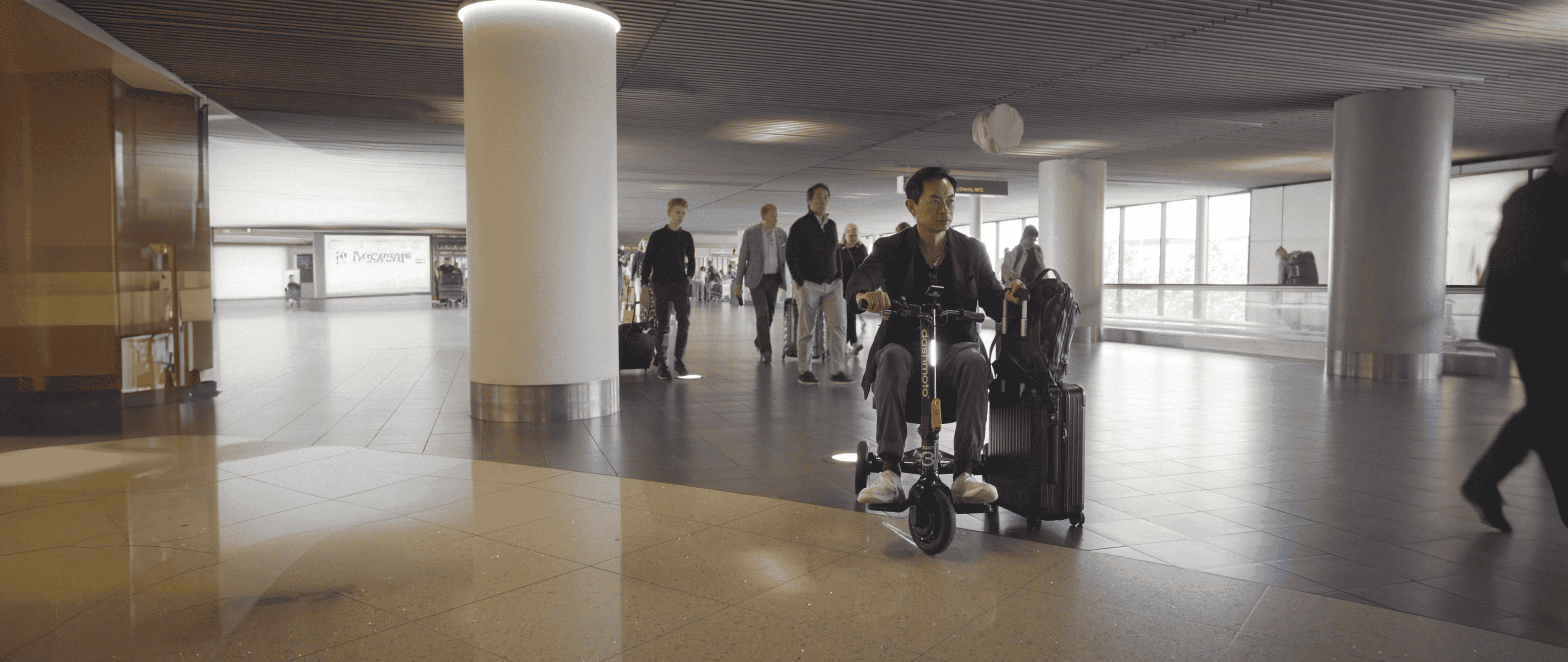
Air travel should feel exciting and empowering, not overwhelming. If you rely on a mobility scooter to move through the world, airline rules and battery regulations can feel confusing at first glance. The good news is that flying with a mobility scooter is not only possible but fully supported under both United States law and international safety rules.
In this complete guide, you will learn how to navigate airline policies, what to prepare before you fly, and how the entire airport journey works from check in to arrival. Then you will find a step by step guide created specifically for dashmoto owners to help you make the most of the dash 3 electric mobility scooter when traveling by air.
Understanding the rules for airline travel with a mobility scooter
Flying with a mobility scooter becomes much simpler once you understand the laws and regulations that protect your right to travel.
Airlines follow disability protection laws in the United States
Under the Air Carrier Access Act, airlines in the United States cannot charge fees to transport your mobility scooter. They must also provide assistance during boarding, gate check procedures, and retrieval of your scooter when you land. This is designed to ensure an accessible experience for every traveler.
FAA rules focus primarily on battery safety
The Federal Aviation Administration sets the rules for lithium ion batteries onboard aircraft. For mobility scooters, the FAA requires that spare lithium ion batteries must be carried in the cabin. Installed batteries must be protected from accidental activation. Their guidelines outline that batteries up to 300 watt hours are permitted for mobility aids. You can review these rules on the FAA PackSafe page for mobility devices.
TSA screens mobility scooters during security
The Transportation Security Administration has clear procedures for screening battery powered mobility devices. You can usually ride your scooter up to the checkpoint. An officer may swab or inspect the scooter and the battery. If you can walk a short distance you may be asked to step through the metal detector while your scooter is inspected. If you cannot walk, staff will provide assistance.
IATA guidelines shape global airline policies
For international travel, the International Air Transport Association publishes Dangerous Goods Regulations that most airlines follow. Current guidance requires passengers to obtain operator approval in advance and provide their device specifications such as watt hours, dimensions, and confirmation that circuits can be isolated. These rules apply especially when traveling outside the United States.
Preparing for your flight
Taking a few simple steps before you reach the airport will make your travel day smooth and stress free.
Contact your airline at least forty eight hours before departure
Airlines usually want to confirm your mobility device details in advance. They may ask for the weight, folded dimensions, battery watt hours, and whether the battery will be installed or carried separately. Providing this information early helps prevent delays at the airport.
Know the specifications of your mobility scooter
Every scooter has its own measurements and battery details. Keeping this information accessible is important because airline staff may request it. It helps to carry a copy of your spec sheet or safety data sheet on your phone. This ensures you are prepared when checking in or speaking with airline representatives.
Prepare your battery for safe cabin storage
The FAA requires spare lithium ion batteries to travel in the cabin. The battery terminals should be protected from contact with metal objects. It is also recommended to fully charge the battery before travel so that your scooter is ready to use when you land.
Pack with convenience in mind
Bring any items needed for a quick fold down at the gate such as your Velcro strap. Keep your documentation in one place. If you are traveling internationally, bring a plug adapter for your charger. The standard dash 3 charger supports 100 to 240 volts, which covers nearly all major regions, so only a local plug adaptor will be necessary.

Arriving at the airport
Understanding how check in and security work for mobility scooters helps remove uncertainty on travel day.
Choose between check in counter or gate check
You can request a mobility tag at the check in counter if you are checking bags. Or you can go directly to the gate if you have only carry-on items. A mobility tag signals to airline staff that your scooter is an assistive device that must receive priority handling. It also helps gate agents keep track of where the scooter should end up for its final destination.
Know what to expect during TSA screening
TSA officers will inspect your scooter and may request to see the battery. If you can stand for a moment you may walk through the metal detector while your scooter is inspected. If you are unable to stand, agents will assist you using alternative screening procedures. The process is designed to accommodate passengers who rely on mobility aids.
Navigate the terminal with confidence
Most travelers find that riding their scooter through the terminal is the easiest way to move to the gate. If at any point you need additional help airport staff can provide support.
Boarding the aircraft
Once you reach the gate, airline staff will guide you through the final steps before boarding.
Gate checking your mobility scooter is simple
You can ride your scooter down the jet bridge until the final boarding point. Fold your scooter and secure it with your strap. Remove the battery so that it can travel with you in the cabin. Gate agents will take your scooter from this point and store it safely in the aircraft hold.
Store your battery in the cabin
FAA rules require that lithium ion batteries travel in the passenger cabin. You can store your battery under the seat in front of you or in the overhead bin. Keep documentation available in case a crew member requests verification.
Use boarding assistance if needed
Airlines provide priority boarding and personal assistance for travelers with mobility needs. If you require an aisle chair or help getting to your seat, simply notify the crew. They are trained to support passengers who rely on mobility aids.

Arriving at your destination
When you land, your scooter will be brought back to you so that you can begin your journey immediately.
Expect your scooter at the aircraft door
Airlines return mobility scooters to the jet bridge rather than baggage claim. If your scooter is not there when you exit the aircraft, speak with the gate agent and they will locate it promptly.
Perform a quick inspection before leaving the airport
Check the battery compartment, folding mechanism, wheels, and controls. If you notice any issues notify airline staff immediately so they can document the condition and resolve the concern under disability handling requirements.
International travel considerations
Countries outside the United States often follow similar rules, but some may require additional documentation.
International airlines may request more detailed device specifications
Many global carriers follow IATA guidelines and may ask for written confirmation of your battery watt hours, your ability to isolate circuits, and your folded dimensions. Providing this information ahead of time ensures a stress free experience.
Some regions apply additional inspection procedures
Airlines in Europe, Asia, and the Middle East may perform extra screening of battery powered devices or require longer advance notice. Reviewing your airline’s specific instructions before departure is always recommended.

Full guide for dash 3 owners
The dash 3 electric mobility scooter was designed specifically for travel. Its lightweight carbon fiber frame, compact foldable shape, and compliant battery system make flying simpler than ever.
Understand what makes the dash 3 ideal for airline travel
The dash 3 weighs only twenty six pounds with the seat removed. It is built from a single piece of T700 carbon fiber for strength and reliability. The standard three hundred watt hour Samsung battery is UL2271 certified and fully compliant with FAA and IATA guidelines for air travel. These features allow you to move through the airport with ease.
For detailed information, be sure to check out these sources:
- Safety Data Sheet (key info is in Section 14 for the standard battery, not the long-range battery)
- dash 3 Spec Sheet (Lists standard battery wattage, dimensions, and weight)
- FAA Regulations (So you know what is and isn’t allowed)
Extra batteries
While the standard battery is perfect for travel, the dash 3’s long-range battery (500Wh) exceeds airline regulations and is better suited for at-home use. You may, however, bring an additional 300Wh standard battery on the plane with you.
Before leaving, ensure the battery is fully charged and securely attached or safely stored for transport.
Share your dash 3 specifications when speaking with your airline
Airline staff commonly ask for the scooter weight, folded dimensions, battery watt hours, and battery type. The dash 3 can isolate electrical circuits when powered off, which is a requirement for most airlines. Keep your spec sheet and safety data sheet ready to share if needed.
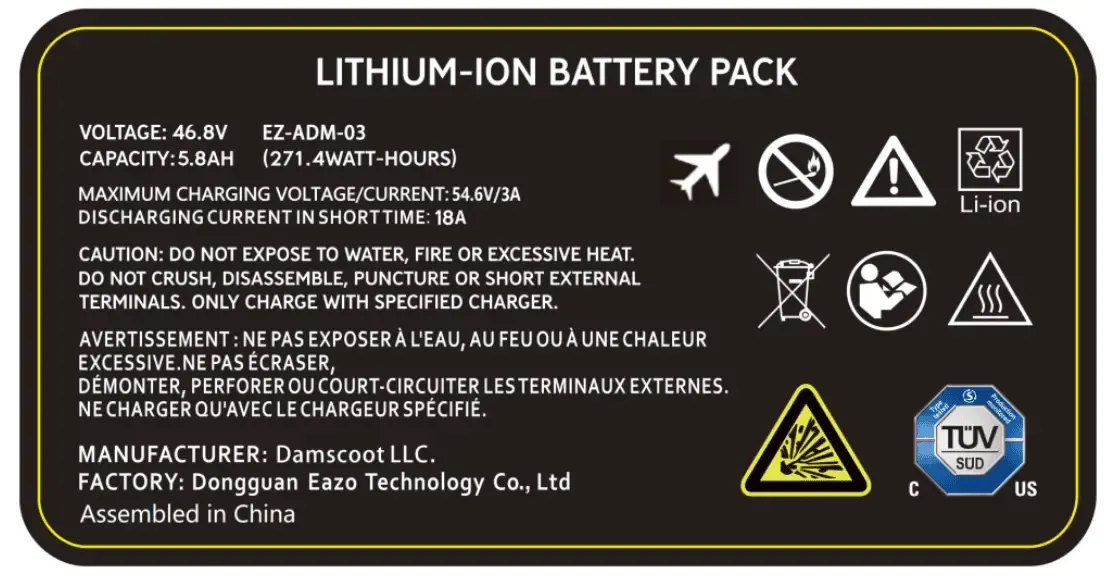
Key standard battery specifications
- Certification: UL2271 certified
- Manufacturer: Samsung
- Type: Lithium-ion
- Voltage: 48V
- Capacity: 280Wh, 46.8V x 6Ah, FAA approved
Key weight and dimensions, folded with the seat removed
- H 17” (43 cm)
- L 40.6” (104 cm)
- W 23.6” (60 cm)
- Weight 26 lbs (12.8 kg)
Move smoothly through security with the dash 3
TSA may inspect the battery or ask you to remove it for screening. If you are unable to walk short distances, officers will provide assistance. The compact and open frame design of the dash 3 makes inspection fast and simple.
Prepare the dash 3 for gate check boarding
Fold the head tube and secure it with your Velcro strap. Remove the battery or keep it attached to the removable seat. Many travelers store the seat with the battery in the overhead bin for convenience. Gate agents will then take your folded dash 3 and place it in the hold.
Retrieve and reassemble the dash 3 when you land
Your scooter will be returned at the aircraft door. Simply reattach your battery, unfold the scooter, and continue your journey. A dedicated travel bag for the dash 3 will soon be available to offer added protection during flights.
Ready for takeoff
Flying with a mobility scooter opens the world in a new way. With the right preparation and the right equipment, air travel becomes simple, stress free, and empowering. The dash 3 was created to support movement without barriers, so every airport, every city, and every journey feels possible.
Discover how the dash 3 can support your travel experience by visiting dashmoto® online.
Related posts

How to Bring Your Mobility Scooter on a Cruise
Cruising with the dash 3 electric mobility scooter is easy, convenient, and empowering. Discover how to make the most of your next voyage.